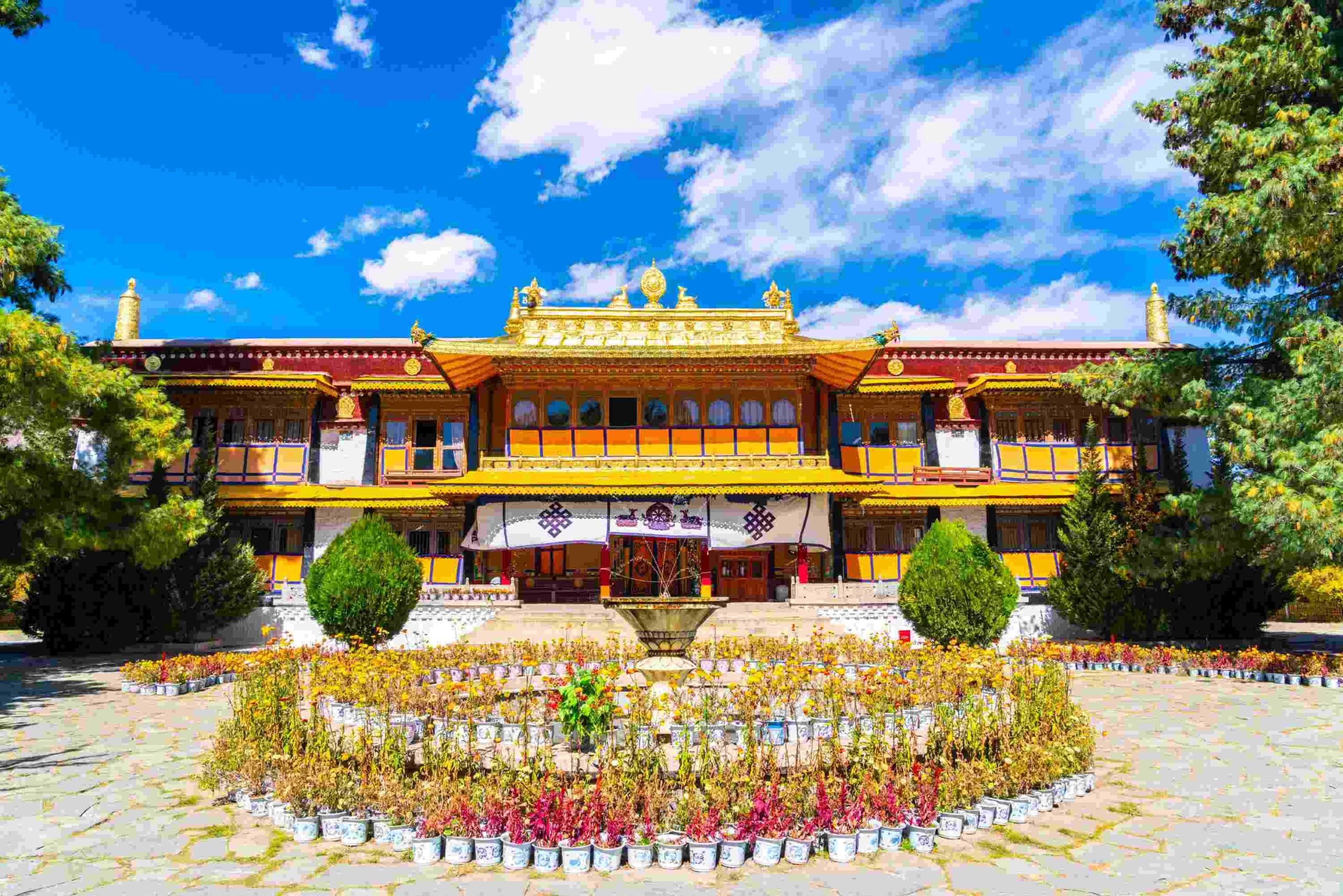
Monasteries in Tibet are working religious communities, not open-air museums. Monks live, study, and pray in the same halls you’ll walk through. Good monastery etiquette in Tibet is mostly about awareness, and your guide will brief you before every visit. This guide covers the basics, so you arrive relaxed and respectful.
Why monastery etiquette in Tibet matters
For many Tibetans, a monastery is a place of daily devotion. Pilgrims may have travelled for days to be there, and monks may be mid-prayer when you walk in. A little care shows respect for them, and people tend to respond warmly when visitors get it right. Curiosity and good manners are all you need.
Inside the chapels
- Walk clockwise: Circle stupas, chapels, and prayer wheels clockwise, in the same direction as the pilgrims.
- Keep your voice low: Chapels are for prayer, so speak quietly and move slowly.
- Take off hats and sunglasses: Do this before entering a prayer hall.
- Watch your hands and feet: Avoid pointing at statues with a finger, and don’t point your feet toward altars or sit with them facing a shrine. Don’t touch statues, murals or sacred objects.
- Step carefully: Many travellers are told not to step on thresholds, so follow your guide’s lead.
Photography rules at Tibetan monasteries
Photography is one of the biggest sources of confusion. Some chapels ban cameras entirely, others allow photos without flash, and some monasteries charge a camera fee. Rules also differ from hall to hall inside the same monastery.
Always ask your guide before taking a photo. Ask before photographing monks, too, and respect a no. Some of the most memorable moments, such as monks chanting or debating in a courtyard, are worth watching rather than filming. Never use flash near ancient paintings or statues.
Dress and what to bring
A simple rule of thumb is to cover your shoulders and knees. Layers help, since halls can be cold and dark even on sunny days. Comfortable shoes that slip off easily are useful, and many monasteries involve stairs, uneven floors, and altitude, so go at an easy pace. If you’re still adjusting to altitude, tell your guide and take it slowly.
Offerings and donations
If you’d like to leave an offering, your guide can explain the local custom. Small donations, butter for the lamps, or a khata scarf are common ways visitors take part, but none of it is required. We never pressure guests into religious participation. Respect and interest are enough.
Why a Tibetan guide helps
Etiquette is easier when you understand what you’re looking at. A Tibetan guide gives you context as well as rules: who lived here, which festival fills the courtyard, why a particular chapel matters. If you’re timing a trip around celebrations, read our guide to festivals worth planning around, because monastery courtyards look very different on a festival day.
Where you’ll put monastery etiquette into practice
Most first trips include several monastery visits in and around Lhasa. Royal Mountain Travel’s Lhasa at a glance page is a helpful overview of the city’s main sites. For a first taste of monasteries and valleys, take a look at our Lhasa & Samye 5-day trip, or browse everything in Lhasa and Central Tibet. Our FAQs cover permits and other practicalities.
A quick checklist before you go
- Cover shoulders and knees.
- Carry a hat you can remove easily.
- Ask before every photo.
- Walk clockwise and keep your voice low.
- Follow your guide’s lead.
Plan your trip with confidence
Tell us your dates and interests, and our Lhasa team will reply within one business day with realistic options. Use Plan a trip or email info@shigatsetravels.com.