Kailash & The West

Tibet – Kailash & the Guge Kingdom

See itinerary

18 days · From on request

Request a free quote

Overview

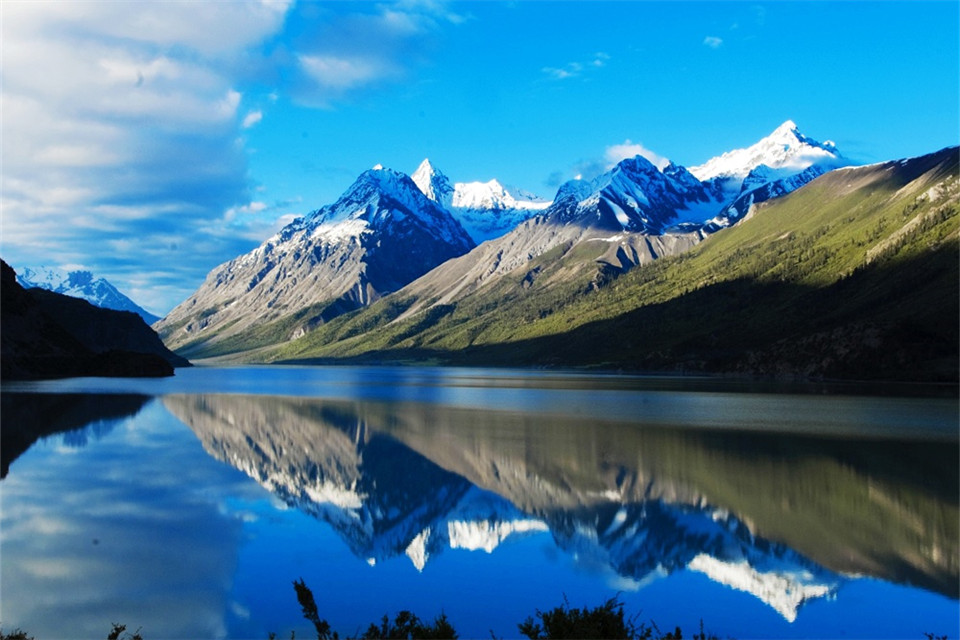
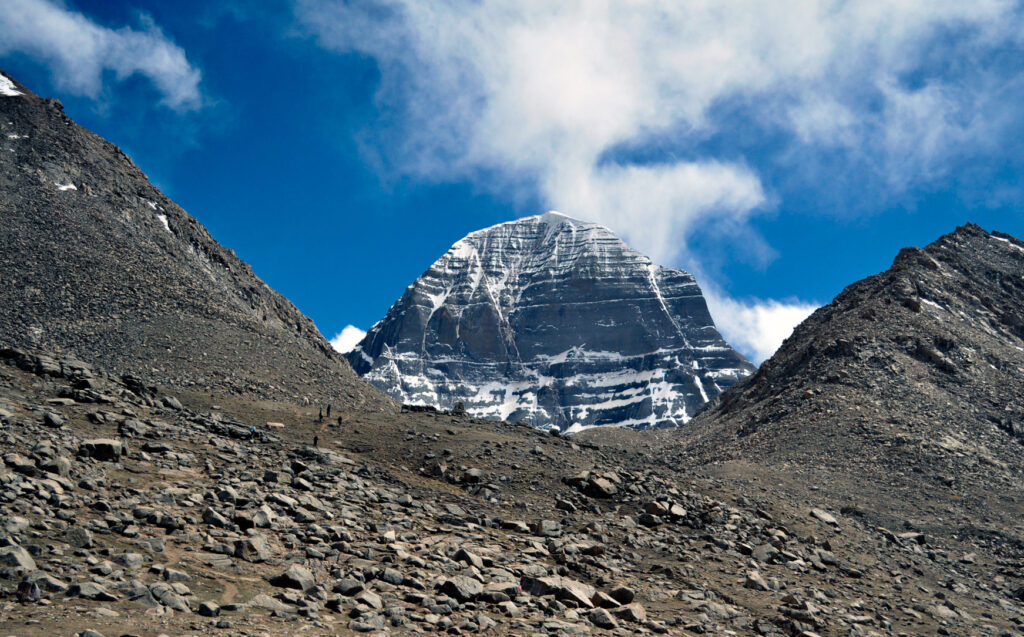
Discover the vastness of the Tibetan Plateau and the grandeur of the world’s greatest mountain range. Make the pilgrimage to and around the sacred mountain at the heart of Buddhist, Hindu, Bon and Jain cosmology & spend a night on the shores of the vast blue Lake Manasarovar.

Travel through stunning landscapes to explore the religious and artistic heritage of the ancient Kingdom of Guge on the banks of the Sutlej River. Cross vast grasslands for a spectacular close-up view of the world’s highest mountain.

Embark on a once-in-a-lifetime adventure to the roof of the world and discover the hidden treasures of Tibet, traversing the vast and rugged Tibetan Plateau and witness the awe-inspiring grandeur of the world’s highest mountain range. Marvel at the breath-taking views of snow-capped peaks, turquoise lakes, and rolling grasslands as you venture deeper into this mystical land.

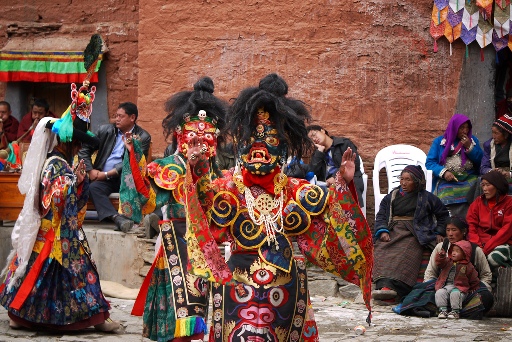
Immerse yourself in the spiritual atmosphere of ancient monasteries and temples and experience the unique cultural traditions of the Tibetan people. Taste the bold and spicy flavours of Tibetan cuisine and witness mesmerizing performances of traditional dance and music. A journey to Tibet is a truly unforgettable experience that will leave you with a deep appreciation for the natural and cultural wonders of this magical land.
 

Itinerary

Tibet – Kailash & the Guge Kingdom

Day 1

Arrive Lhasa - transfer to hotel

Arriving in Lhasa, visitors will be greeted by the stunning natural beauty of the Tibetan plateau. The city is situated at an altitude of over 3,686 meters above sea level and is home to many significant cultural and historical sites. Transfer to the hotel to catch your first glimpse of the city and its unique architecture, which is heavily influenced by Tibetan Buddhism.

Your arrival day is relaxed, with no set activities in order to allow your body to adjust to the effects of altitude. A welcome dinner is included this evening.

Day 2

Lhasa sightseeing - visit Drepung & Sera

The university monastery of Drepung is one of the three most important Gelugpa monasteries in Tibet and was founded in the 15th century. It houses a large collection of Buddhist scriptures, artifacts, and artwork, and is known for its beautiful architecture and peaceful atmosphere.
Nechung is a small temple located nearby and is the home of the Nechung Oracle, a medium who is believed to be possessed by a deity and who offers spiritual advice and guidance. He is the personal oracle of the Dalai Lamas.
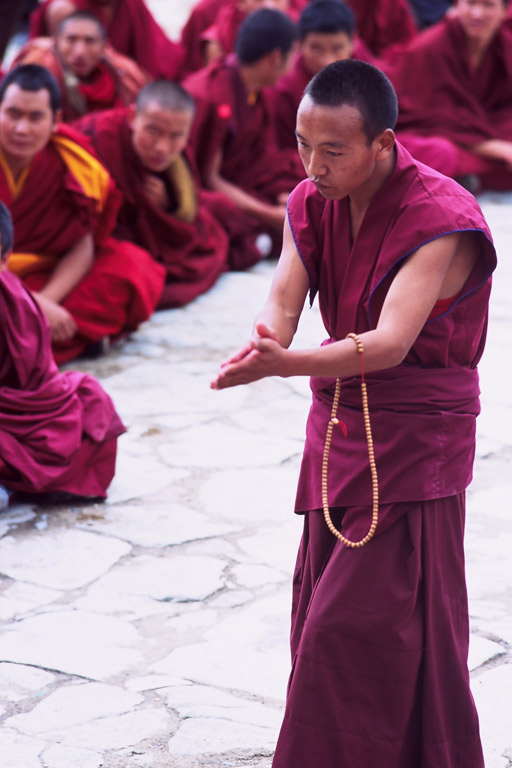
Sera is another important Gelug monastery located on the northern foothills of Lhasa and is known for its vibrant debating culture. Monks at Sera engage in lively philosophical debates on Buddhist doctrine, which can be fascinating to observe.

Day 3

Lhasa sightseeing - Potala, Jokhang & Barkhor

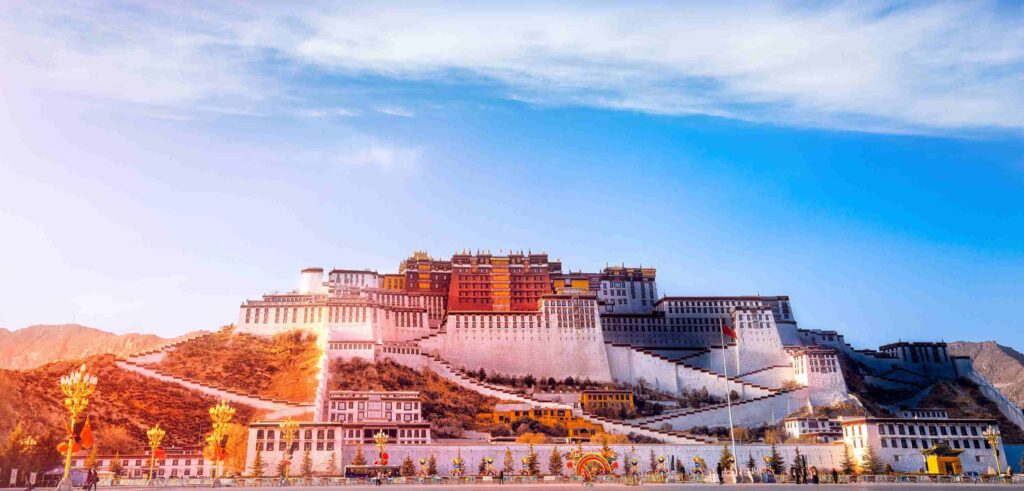
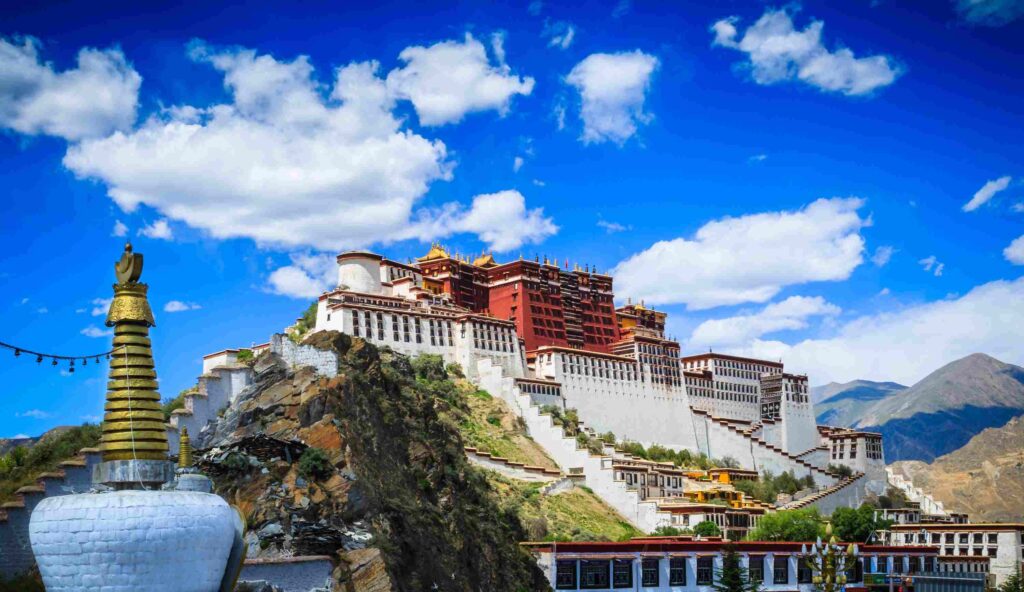
The Potala Palace is a massive fortress-like structure that dominates the Lhasa skyline. It was the winter palace of the Dalai Lamas and contains a complex of chapels, halls, and rooms that are richly decorated with frescoes, carvings, and sculptures. Explore the many levels of the palace, including the Red Palace and the White Palace, and admire the stunning views of the city from the rooftop.
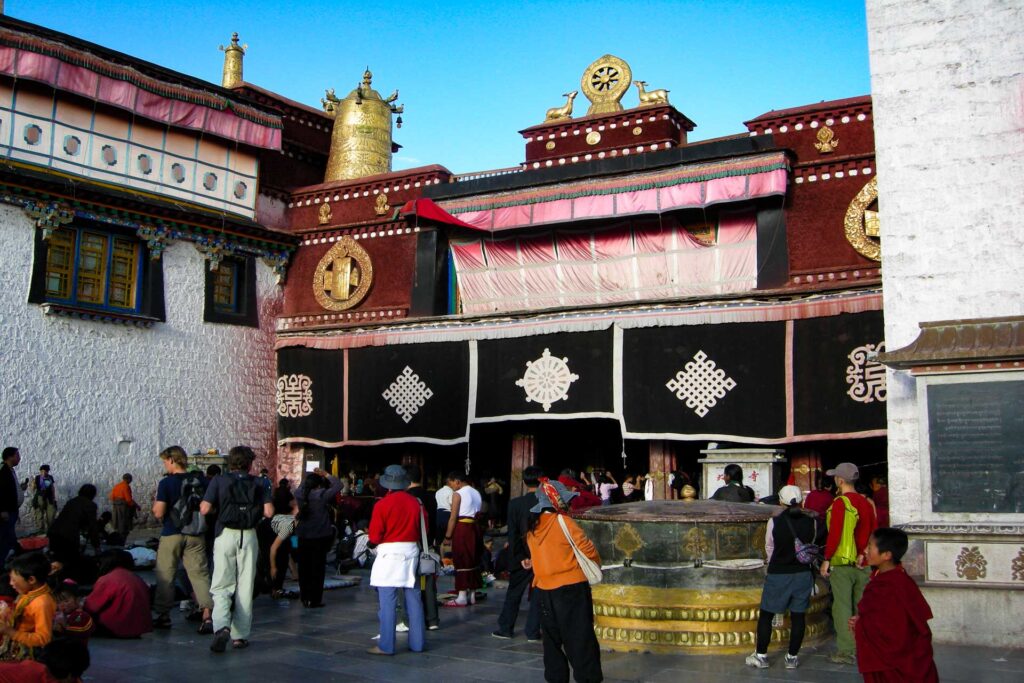
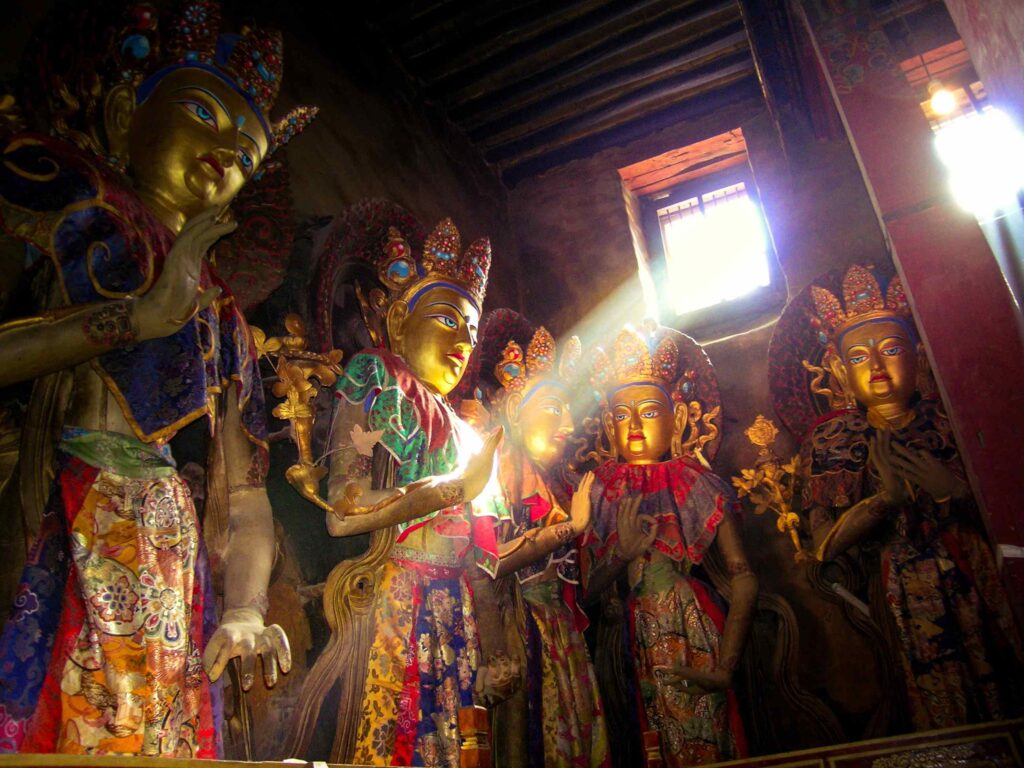
The Jokhang Temple is considered the spiritual heart of Tibet, located in the heart of Lhasa. It is one of the oldest and most revered temples in Tibet and is known for its impressive architecture and religious artifacts. Amid the many shrines and statues of Buddha witness the daily rituals and offerings made by devotees.
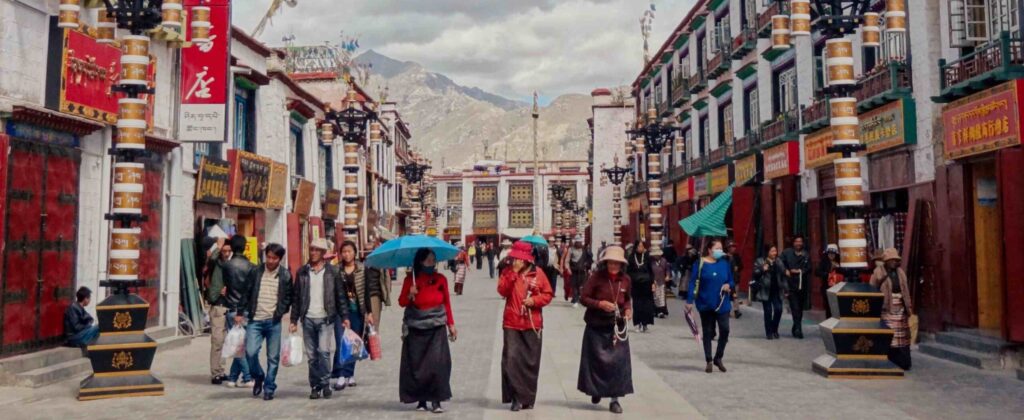
The Barkhor is a bustling marketplace and pilgrimage route that circles the Jokhang Temple. It’s one of the oldest and most vibrant areas of Lhasa and is a great place to buy traditional Tibetan goods such as prayer flags, incense, and handicrafts. You may also ask your guide to visit a nunnery, Tibetan Medical Institute, art workshops …

Day 4

drive via Yamdrok Lake to Gyantse

A full day’s drive with many photo stops follows a spectacular route to Gyantse. From the top of the Kamba Pass (4794m), the views of the turquoise lake, Yamdrok-Tso, are unforgettable. The road winds down and along its shores via the small town of Nangartse before climbing again to the Karo La (5054) and the glaciers of Mt Nojin Kangtsang.
For those interested, it is an option to take a short detour to the spectacularly sited Ralung, principal seat of the Drukpa Kagyu.
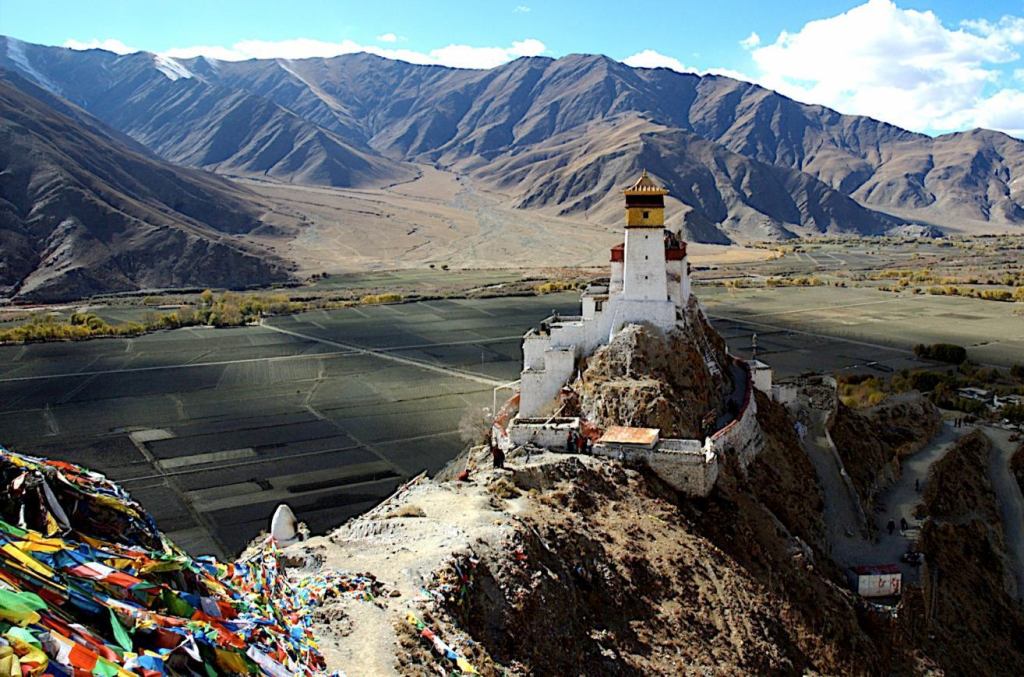
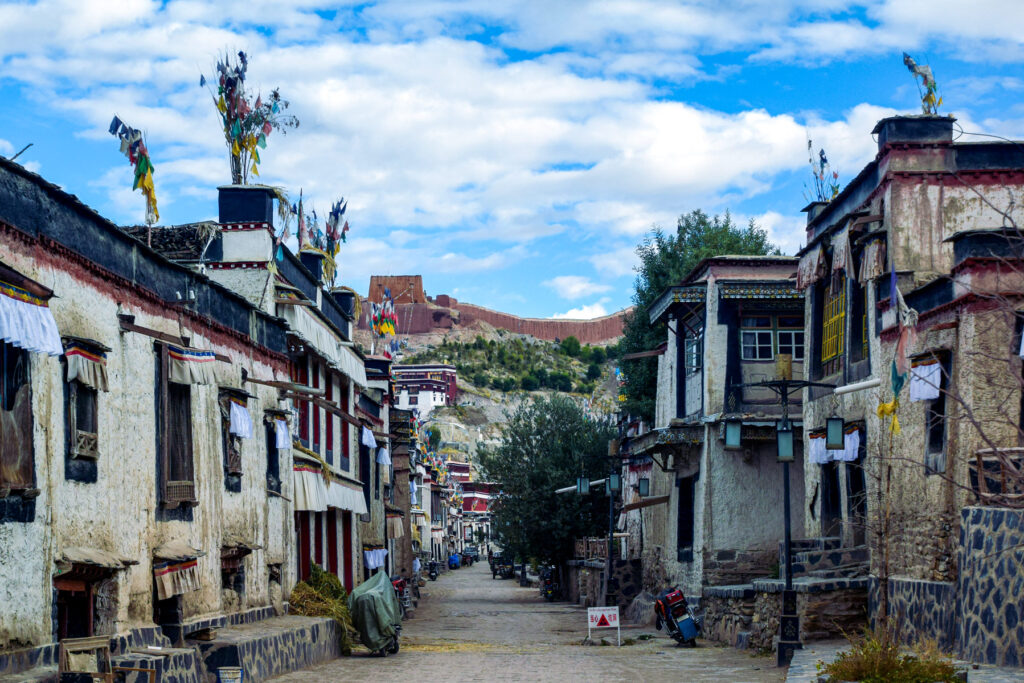
Gyantse was once of major importance as a trading centre on the routes between India, Sikkim, Bhutan, Tibet and China; its imposing fort, Gyantse Dzong, dominates the skyline.

Day 5

visit Pelkhor Choede – drive via Shalu to Shigatse

Pelkhor Choede is a unique blend of Tibetan and Nepalese architectural styles and was established in the 15th century as an ecumenical community, eventually comprising 18 colleges representing different traditions of Tibetan Buddhism – Gelukpa, Karma Kagyu, Sakyapa, Shalupa, Drukpa Kagyu …
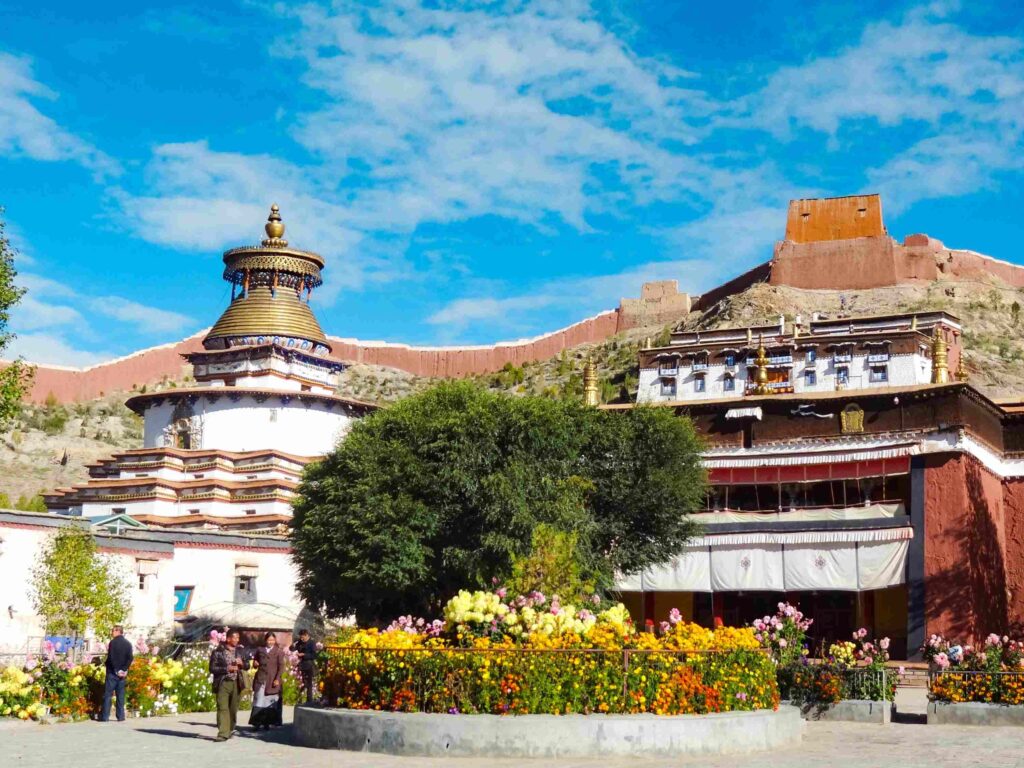
Within the complex stands the Gyantse Kumbum, a large and impressive chorten (stupa) containing over 100,000 images and is considered one of the best examples of Tibetan art.
The drive to Shigatse takes travellers along a valley filled with farmlands and small villages. A short diversion off the road between Gyantse & Shigatse drives through small villages to Shalu. The seat of Buton Rinpoche. Shalu is a very beautiful 11th-century monastery, renovated in the 13th- 14th centuries with funds provided by the Mongolian Emperor. Its wonderful artwork reflects the same traditions as those of the far western Guge area.
Shigatse is the second-largest city in Tibet and is home to Tashilumpo, one of the largest and most important Gelugpa monasteries in Tibet. Depending on timing, visit this afternoon or tomorrow morning.

Day 6

visit Tashilumpo – drive to Sakya & visit x

Tashilumpo is the seat of the Panchen Lama, second only in importance to the Dalai Lama. Its numerous halls contain a 21.6-meter wooden statue of Maitreya, the future Buddha, and an elaborate, jewel-encrusted reliquary chorten.
After lunch, drive via Sakya to Shegar. Sakya was the seat of political power in central Tibet from the 10th to mid-14th century. The distinctively coloured fortified gompa is still the seat of one of the most important schools of Tibetan Buddhism and is famous for its library.

Day 7

Sakya to Rombuk & Everest

From Sakya, return to the Friendship Highway and cross its highest point – 5220m before descending again to Shegar, from where you again turn south into the Himalaya and begin the climb through Qomolangma National Park – partway up, you will transfer to eco-buses for the rest of the way to Rombuk.
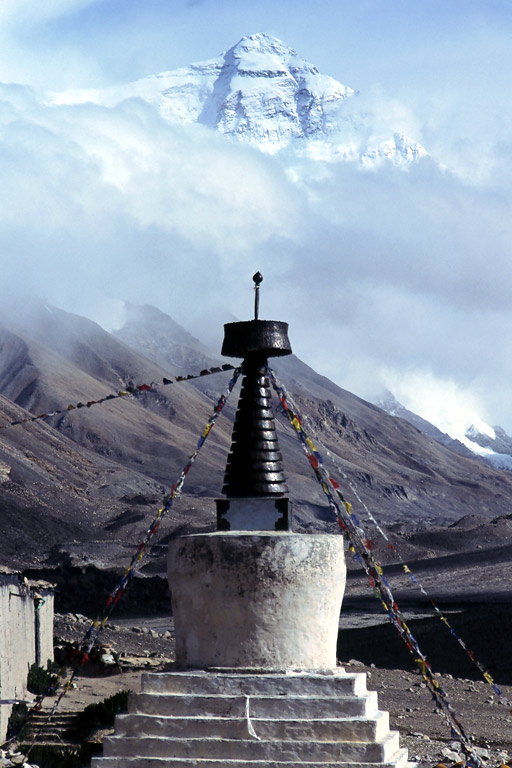
Said to be the world’s highest monastery at 5000m, Rombuk Gompa is situated to provide the perfect view directly up the valley to Mt Everest (Qomolangma). The monastery guest house provides simple but comfortable rooms and meals in the tea house.

Day 8

drive via Paiku Tso drive to Saga

Descending from Rombuk, head north across the lush grasslands surrounding Lake Paiku Tso, admiring views of Shishapangma along the way.
Saga has little appeal as a town but offers decent accommodation and restaurants for your overnight stop.

Day 9

drive to Menshi

Set out across the vast expanses of western Tibet. Passing small towns & villages, today you will enjoy your first sights of both Mount Kailash & Lake Manasarovar before continuing west to the small village of Menshi.

Day 10

visit Tirthapuri (Gurugyam & Khyunglung) & drive to Tsada

This morning, a side trip takes you to the sacred hot springs of Tirthapuri. An important pilgrimage site, there is a small temple and a cave associated with Padmasambhava and his consort – there are rocks with indentations of their footprints and the stone through which he extracted the consciousness of the ogress who inhabited the cave. This is an amazing landscape of red and white earth.
*It is also possible to visit Gurugyam, one of the most important Bon monasteries of western Tibet, and Khyunglung, provided you have specified this when booking so that it is included on your permits.

A bit further up this road is Khyunglung, the remains of Tibet’s first inhabited city – a vast cave city complex within the Garuda Valley on the banks of the Sutlej, confirmed as the location where the kings of Shangshung established their rule.
Return via Menshi, then head into the hills and canyons to Tsada (Zhada) on the cliffs above the Sutlej River, one of the most magnificent landscapes of Tibet

Day 11

Visit Tholing & Tsaparang (Guge Kingdom)

Visit some of the most magnificent of Tibet’s historic sites; its style and artworks mark the areas long independence from central Tibet. The kingdom of Guge was established in the 9th century following the assassination of the anti-Buddhist king Langdarma and the breakup of the Yarlung Empire. His descendants travelled west and established a capital at Tsaparang.
In the 11th century, Tholing was the greatest and historically most important monastery of western Tibet, its influence stretching from Kashmir to Assam. The surviving 15th- and 16th century murals are splendid examples of the Guge style, a synthesis of Kashmiri and Newari art.
Tsaparang sprawls over a ridge alongside the Sutlej River. The entire ridge is covered with temples, chortens, houses, cave dwellings, fortifications and secret passageways.
It is one of the most important art-historical centres in Tibet with stunning murals adorning the Lhakang Marpo and Lhakang Karpo.

Day 12

drive via Dungkar - Piyang to Darchen

Dungkar and Piyang comprise an area of 2000+ cave dwellings & temples, approximately 1100 years old, with strong Silk Road influence – much artwork reminiscent of the Dunhuang area. The altars and mandalas of Dungar are probably the earliest in western Tibet. In the 16th-century Gelug monasteries, controlled by Shigatse, they were active at both sites. Visit these cave temples with their long histories and wonderful artworks before heading to Darchen to prepare for your kora.

Day 13

Kailash Kora - Darchen to Dira Phuk

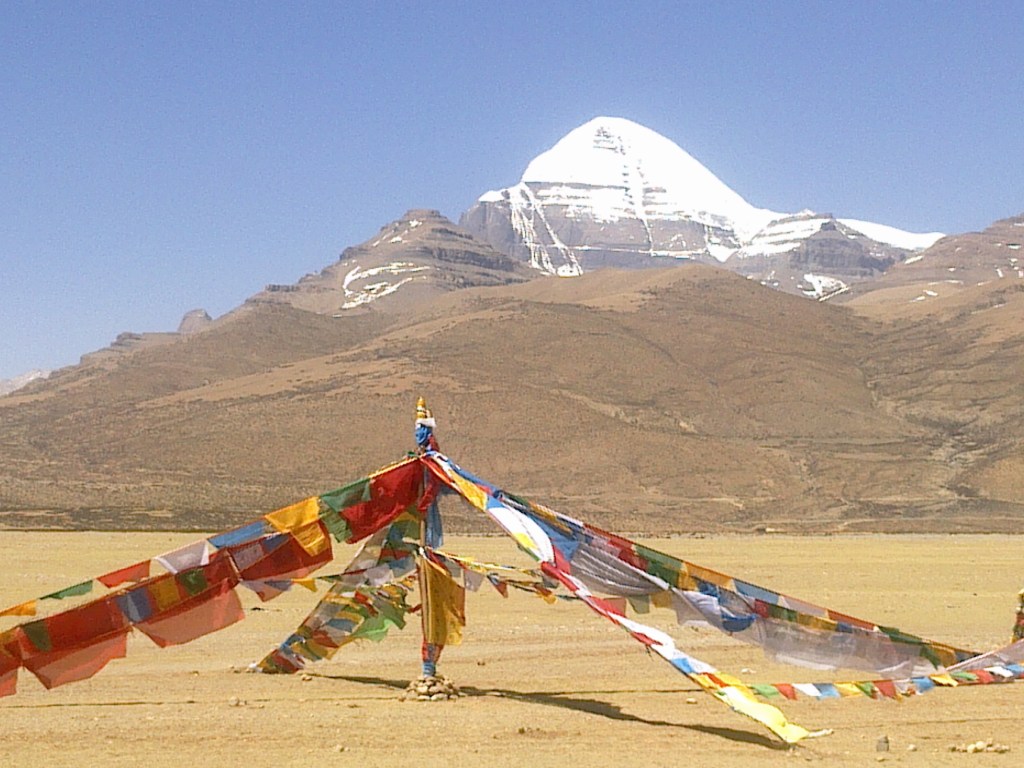
Collectively known as Kangri Tsosum – Ponri Ngaden, Lake Manasarovar & Kailash – are said to be the heart of the ancient Zhangzhung Kingdom, the supposed land of origin of the pre-Buddhist Bonpo.
To the Bon, it is called Yungdrung Gu Tse (Nine-Storey Swastika Mountain) and is the place where their legendary founder, Tongpa Shenrab, descended from heaven to earth. In the 11th century, however, Naro Bonchung ‘lost’ both Kailash and Lake Manasarovar to the Buddhist Milarepa in a contest of magical powers. To complete a kora (circumambulation) is the goal of every Tibetan; a single kora cleans the sins of a lifetime whilst 108 guarantee enlightenment.
The first day of the kora (circumambulation) passes the site of the huge prayer flagpole at Tarboche, renewed at Saga Dawa each year. A steep trail through a maze of boulders carved with mantras leads to a Drukpa Kagyu Monastery, dwelling place of the protector of the Kailash region. A rock has a rangjung image of a conch shell believed to have fallen from the sky and dissolved into the rock.
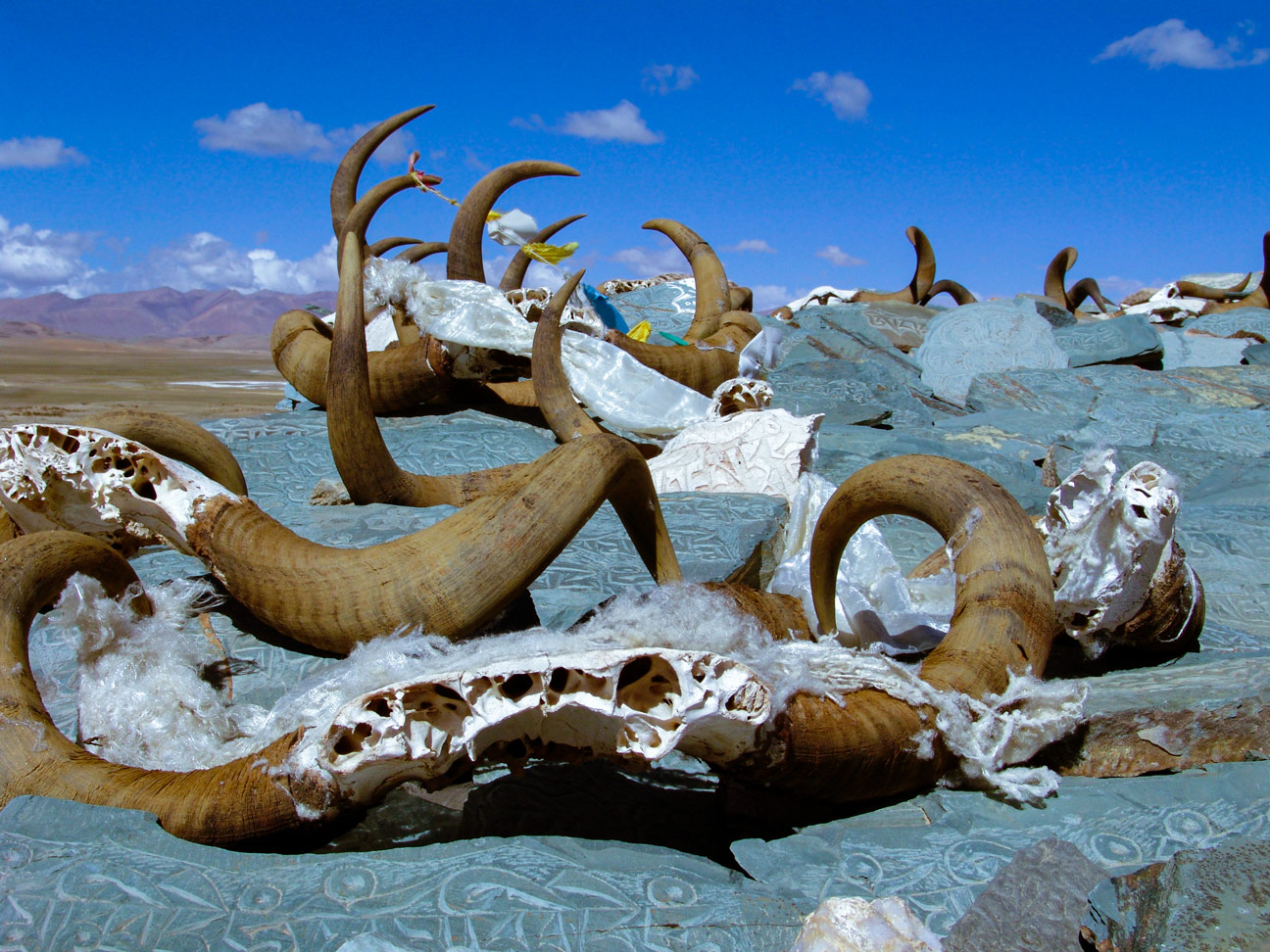
Passing many sacred places, the trail ascends steadily to Dira Phuk (Cave of the female Yak’s Horns). On the ceiling of the dukhang is a rangjung imprint of a female yak. Overnight at the guest house here. Darchen-Dira Phuk: approx. 6 hours walking; transport as far as Tarboche can also be arranged to cut the distance.

Day 14

Kailash Kora – Dira Phuk, cross Drolma-la to Zutrul Phuk

Today is a tough day as you climb steeply to cross the Drolma-la (5636m), followed by a short but very steep descent and a long hike down the valley on the east side of the mountain.
There are numerous sites of immense significance, and you will see pilgrims stop regularly. These include Siwatshal, a replica of the fabled burial ground at Bodh Gaya. Here pilgrims undergo ritual death and enter into the horrific presence of Dorje Jigje before being reborn on top of the Drolma La. All who pass leave offerings.
Crossing the Drolma-la represents the transition from this life to a new one. Here the pilgrim is reborn, and all sins are forgiven. Every stone here is looked upon as representing the Three Jewels and considered to be imbued with the three qualities of the Buddha (mind, body, speech).

Day 15

complete Kailash kora - drive to Chiu Gompa (Lake Manasarovar)

It is only a short, gentle hike back to Darchen (2.5 hours; transport also possible) before heading to Lake Manasarovar to relax.
The ‘Lake Conceived from the Mind of God’ is a brilliant turquoise expanse of water, pure beyond conventional scientific confirmation. Its sun-shape is a balance and contrast to Rakshal Tal.
Spectacularly perched on a rocky pinnacle, Chiu Gompa is a branch of Dira Phuk Gompa on Kailash and is the site of the cave where Padmasambhava lived and meditated for the last 7 years of his life. The granite contains clear imprints of his hands and feet. Here too is the source of the Sutlej River – its water level reflecting the fortunes of Tibet.

Day 16

Return drive to Saga

Return drive to Saga

Day 17

drive to Kyirong(views of Shishapangma)

Head back south across the beautiful Paiku Tso grasslands with views of Mt Shishapangma before turning west via waterfalls, sacred spots and villages to Lower Kyirong – just before the Nepal border.

Day 18

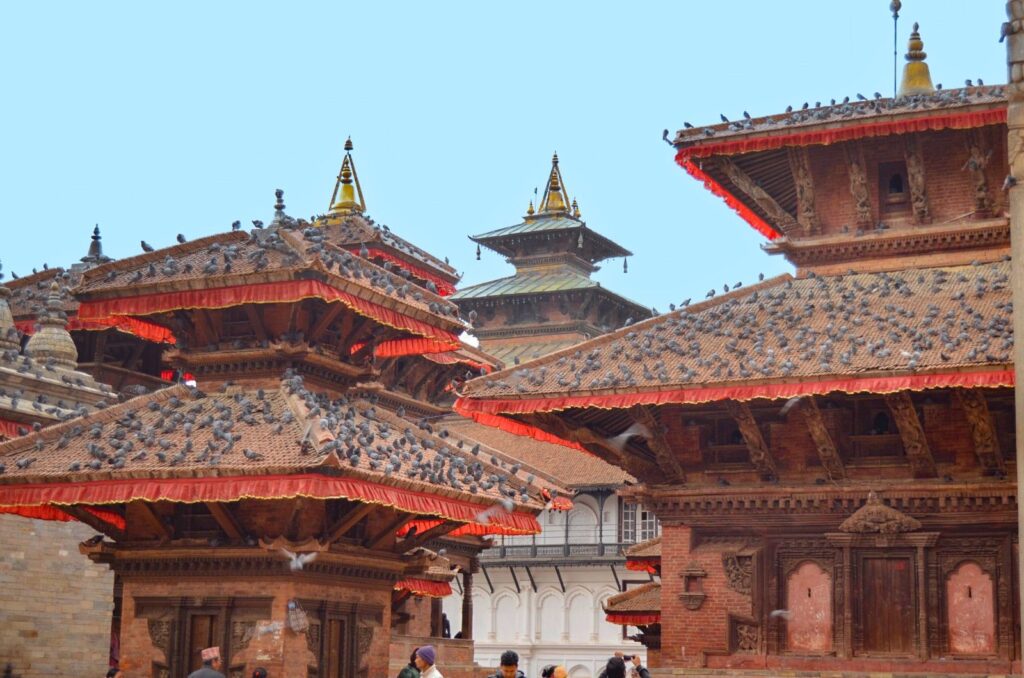
Rasuwa border - Kathmandu

Crossing the border in the morning can be slow and rather chaotic on the Nepal side. You then have a long drive to Kathmandu, as the road conditions are not good and roadworks can slow things. We recommend that you do not book departure flights for this evening.
If you are familiar with Kathmandu and prefer to arrange your own accommodations here, just let us know when you book the trip.

Day 19

Option: This trip can also be operated Lhasa-Lhasa.

In this case Day 17: Saga-Shigatse / Day 18: Shigatse-Lhasa (or departure flight from Shigatse airport / or afternoon departure from Lhasa airport after 15:00)

Know before you go

  • A valid Chinese visa is required before we apply for your Tibet Travel Permit. Timing is confirmed once your itinerary is set.
  • Foreign visitors travel with a licensed guide in Tibet. Ours are Tibetan or long-resident specialists who know the routes and permit rules.
  • This journey is rated Moderate. We pace days for acclimatisation and will be honest if a route is unrealistic for your group.
  • Allow 18 days on the plateau, plus international arrival and departure days either side if flying via mainland China or Nepal.
  • Typical group size: Up to 1 guests. Private departures can be arranged for couples and families.
  • Altitude rises quickly after Lhasa. We build in rest where it matters and brief you on preparation before departure.

Questions

Visas, guides, altitude, and how booking works — practical answers before you travel.

Do I need a Chinese visa to travel to Tibet?

Yes. Tibet is part of China, so foreign travellers need a Chinese visa before we can apply for your Tibet Travel Permit. If you arrive via a Chinese city (Beijing, Chengdu, Xining and so on), you normally need an individual tourist “L” visa from a Chinese embassy. If you arrive from Nepal, you typically need a group visa issued in Kathmandu. Once you’ve booked and your arrival plans are set, we’ll send instructions for your route.

How do I get travel permits for Tibet?

We apply for every permit your itinerary needs. The Tibet Travel Permit (TTB) is required to board your flight or train into Tibet, and we send it to Beijing, Chengdu or whichever gateway city you use. Once you arrive, your guide handles the on-the-ground paperwork. Everest, Mount Kailash, Guge and parts of eastern Tibet need extra permits, which we list when we propose your route.

Can I change plans at the last minute or after arrival?

Big changes are hard, because your permits name your itinerary, places of visit and arrival city. Small swaps inside Lhasa are usually fine, for example visiting a thangka workshop instead of Drepung. If your dates or regions might shift, tell us early.

Must I travel with a guide?

Yes. Foreign visitors in Tibet must travel with a locally licensed guide. A Tibetan guide meets you at Lhasa airport, the train station or the land border and stays with you. Ours work directly for us, are trained and experienced, and speak English. They won’t follow you around every minute, but you’ll need one for monasteries and anywhere outside Lhasa. Rules on independent wandering change over time, so your guide will explain what applies now. Their knowledge of places and customs is a big part of the trip.

Can I use local public transport?

Generally no. Foreigners must use private vehicles licensed for tourist use. In Lhasa you can take taxis or rickshaws around the city. Older guidebooks that suggest travelling solo by public transport are out of date, and the guide and vehicle rules have been enforced for years.

What vehicles will we use?

We use a car, van, minibus or bus, depending on your route and group size. Most tourist roads, including those toward Kailash, Guge and Everest, are paved and in good condition, so a 4WD is rarely needed. Our drivers know the plateau roads well and can fix a breakdown. Their English varies, but they know the best photo stops.

Will I be affected by altitude?

Lhasa is at about 3,650m, and a mild headache or nausea on arrival is common. It’s hard to predict who gets it: age and fitness tell you little, and the same person can react differently on another trip. Younger, fitter travellers often struggle more because they push too hard. Go slowly for the first couple of days, drink plenty of water, and pause on stairs. Lhasa’s hospitals are used to altitude cases, and very few guests can’t complete a well-paced itinerary. Ask your doctor about personal medication before you travel, as we can’t prescribe.

How do you pace high routes like Everest or Kailash?

We schedule acclimatisation days before going higher. Everest and Kailash days are long, so where you sleep matters more than how many sights you tick off. If someone in a private group needs a rest day, we’ll adjust where permits and hotels allow. Tell us about any health concerns when you enquire.

What is travel in Tibet actually like?

Many routes pass through remote areas. Infrastructure keeps improving, but outside the main towns it’s often basic. Western Tibet in particular is tougher than a typical holiday, with harsher conditions and simpler facilities. Weather and road conditions can change plans, and some of the best moments come from that. We’ll tell you plainly what to expect before you book.

Are there rules about politics and photography?

No political activity is allowed. That includes photographing military personnel or installations, commenting publicly on politics, and carrying material linked to exile politics. These are Chinese laws, and booking with us means agreeing to follow them. Guides are held responsible for their guests’ behaviour and can face fines or lose their licence, so please travel carefully and respectfully.

How should I behave in monasteries?

Monasteries are active religious communities. Walk clockwise where that’s the custom, keep your voice low, and ask before photographing statues or monks, as some halls don’t allow cameras. Cover your shoulders and knees. Your guide will brief you before each visit, and you’re never pressured to take part in any religious practice.

How far ahead should I book?

Two to three months ahead is comfortable for permits and peak-season hotels. Festival weeks and popular Everest and Kailash dates fill earlier. Shorter notice is often possible, so email us your dates and we’ll tell you what we can do.

Private journey or fixed departure?

A private trip follows your dates, pace and group size, with your own vehicle and guide. Fixed departures suit solo travellers and small parties who want a set route and shared costs. Both need permits and a licensed guide. Tell us how you’d like to travel and we’ll suggest the better fit.

How do I start planning?

Use the Plan a trip button, or email us your dates, group size and regions. We reply within one business day with options that fit your dates. If a request doesn’t suit the season or the altitude, we’ll say so.

18 days From on request
Request quote