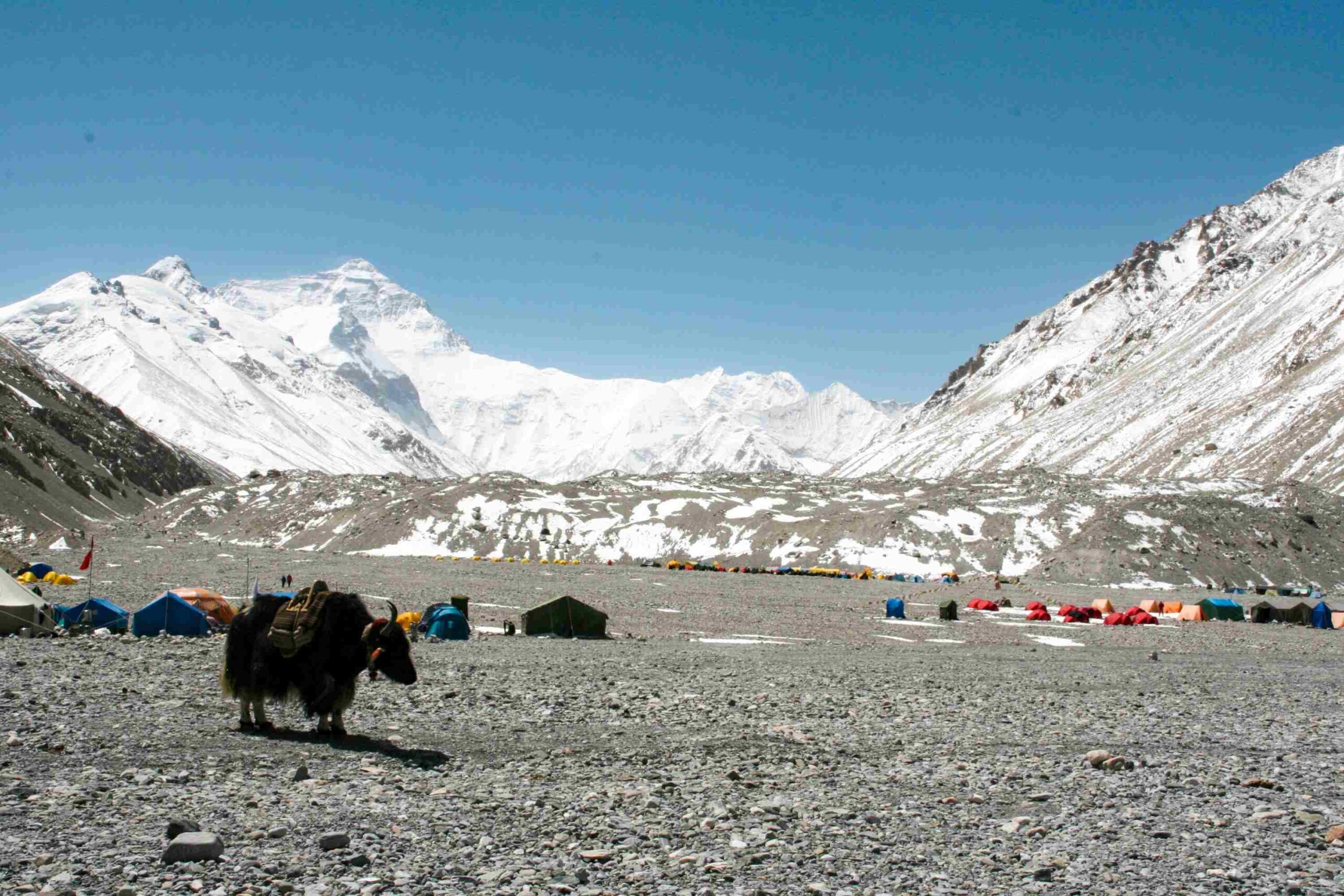
Everest Base Camp Tibet is a very different experience from the trek in Nepal. You don’t hike from Lukla. You travel overland, usually by vehicle from Lhasa or Shigatse toward Rongbuk Monastery, with time built in to adjust to the altitude before the final stretch. This guide explains what the journey involves and how we plan it.
Everest Base Camp Tibet vs the Nepal side
On the Nepal side, trekkers walk for days to reach Base Camp. On the Tibetan side, the road takes you most of the way, and the north face of Qomolangma (Everest’s Tibetan name) appears suddenly when the weather clears. The challenge here isn’t hiking. It’s the length of the road days and the altitude.
The overland route to Everest Base Camp Tibet
Most journeys follow the Friendship Highway west from Lhasa through Gyantse and Shigatse, then on toward Rongbuk. Days are long, with high passes and wide plateau landscapes, and some viewpoints give a first glimpse of the Himalayan range. For monasteries, you may pass along the way; see these offbeat monasteries on the Friendship Highway.
For an example of how a full route looks, Royal Mountain Travel’s 11-day Tibet Everest Experience runs from Lhasa to Kathmandu via Everest.
Altitude on the way to Everest Base Camp
Rongbuk Monastery sits at around 5,000 metres, and the tourist Base Camp is a little higher, so this is serious altitude. We pace overnight stops so you aren’t racing from Lhasa to 5,000 metres in a single push. Your first days in Lhasa matter too. For symptoms and how we handle the early days, read our guide to altitude advice for first-time Tibet visitors.
Overnight options near Rongbuk
Accommodation near Rongbuk and Base Camp is basic, with simple guesthouses and tent-style stays, and facilities are limited. Staying overnight gives you the best chance of seeing the mountain at dawn or dusk, but it’s also a colder, higher night. We’ll talk through the options and recommend what suits your group’s comfort and acclimatisation.
What the day actually feels like
Expect an early start and a long drive. The landscape opens up as you climb, and the final stretch to Base Camp is quiet and dramatic. When the sky is clear, the north face of Everest is unmistakable. When it isn’t, you may see only cloud. Many travellers describe the moment as simple and powerful, with no summit push needed.
Weather, flexibility and permits
Weather can close visibility without warning. We keep itineraries flexible enough for an extra night when the skies are worth waiting for. Permits for the Everest region are arranged along with your main Tibet Travel Permit package, so you don’t deal with them separately. Rules can change, so we confirm details before departure. Our FAQs cover the common questions.
How to plan your Everest Base Camp Tibet trip
Think about three things:
- Days available. A realistic route needs enough time for the drive and for acclimatising.
- Private vehicle or small group. Private trips can change pace and timing. Group departures follow a tested outline.
- Add-ons. Many travellers combine Everest with Lhasa, Namtso or onward travel to Nepal.
You can browse the Mount Everest region page or all tours for ideas.
Everest Base Camp Tibet: common questions
Do I need to trek?
No. The Tibetan side is reached by road, though you’ll still walk short stretches at high altitude.
Will I definitely see Everest?
Not guaranteed. Clouds can hide the mountain, which is why we leave a buffer night when possible.
Is it suitable for a first trip to Tibet?
Many people include it on a first visit. We’ll tell you honestly whether your dates and fitness fit.
Plan your trip
Tell us how many days you have and whether you prefer a private vehicle or a small group departure. We’ll map a realistic route from Lhasa. Our team replies within one business day. Use Plan a trip or email info@shigatsetravels.com.